
What Actually Counts as Carbon Removal - And Why Most Markets Are Missing the Point
What Actually Counts as Carbon Removal - And Why Most Markets Are Missing the Point![[background image] image of a farm landscape](https://cdn.prod.website-files.com/68d5806cbf60124f871d0748/6978c907523b33bd38747237_what-actually-counts-as-carbon-removal---and-why-most-markets-are-missing-the-point%20(2).jpg)
We're often asked whether a particular sustainability project qualifies for carbon removal credits. The answer isn't always straightforward—but the real question runs deeper than most people realize.
At Orejen Carbon - whilst we absolutely believe in the urgent need to scale carbon removal at the gigaton level - we also consider the markets have a blind spot. They price tonnes of CO₂. Soil health improvements, water quality, biodiversity uplift, farmer income diversification—gets lumped into "co-benefits," and are treated as nice-to-have extras rather than core value propositions.
This matters because the most regenerative projects often can't command premium pricing for the full scope of their impact. And it shapes which projects get funded, how they're designed, and whether carbon removal actually delivers systemic transformation or just moves numbers on a spreadsheet.
This article explains how project developers and corporate buyers can assess whether activities qualify as Carbon Dioxide Removal (CDR)—and why we here at Orejen Carbon believe the distinction between "removal with extras" and "removal as regenerative infrastructure" is becoming increasingly important.
What Separates Removal from Reduction
Unlike standard carbon credits—which are often earned by reducing emissions (building solar instead of coal)—removal credits require activities that physically extract CO₂ already in the atmosphere and store it durably.
Many activities can qualify for removal credits, but not everything green or climate-positive counts. Avoided deforestation, for example, is critically important for climate mitigation. But it's generally classified as avoidance rather than removal, because it prevents emissions instead of removing CO₂ that's already there.
Projects must also demonstrate additionality—the removal wouldn't have occurred without the incentive provided by carbon credit revenue. Depending on the standard, methodology, project type, and local conditions, the specific eligibility criteria can vary.
Two Pillars of Carbon Removal
CDR methods generally fall into two categories: biosphere-based (using living systems) and engineered (using technology and industrial processes). Each comes with different trade-offs in terms of permanence or durability, scalability, cost, and—crucially—what happens beyond the carbon.

Biosphere Carbon Removals
These harness photosynthesis and ecosystem restoration. Living systems capture CO₂ and store it in biomass and soils.
Afforestation & Reforestation
Forests remain the planet's original carbon sink. Planting trees in deforested or degraded lands rebuilds biomass density through photosynthesis, converting atmospheric CO₂ into organic carbon stored in trunks, branches, roots, and soil.
The IPCC estimates afforestation and reforestation could remove 0.5–10.1 Gt CO₂ annually, making it one of the most scalable near-term pathways. The wide range reflects massive variability depending on climate, species selection, and management approach.
Coastal and Marine Ecosystems (Blue Carbon)
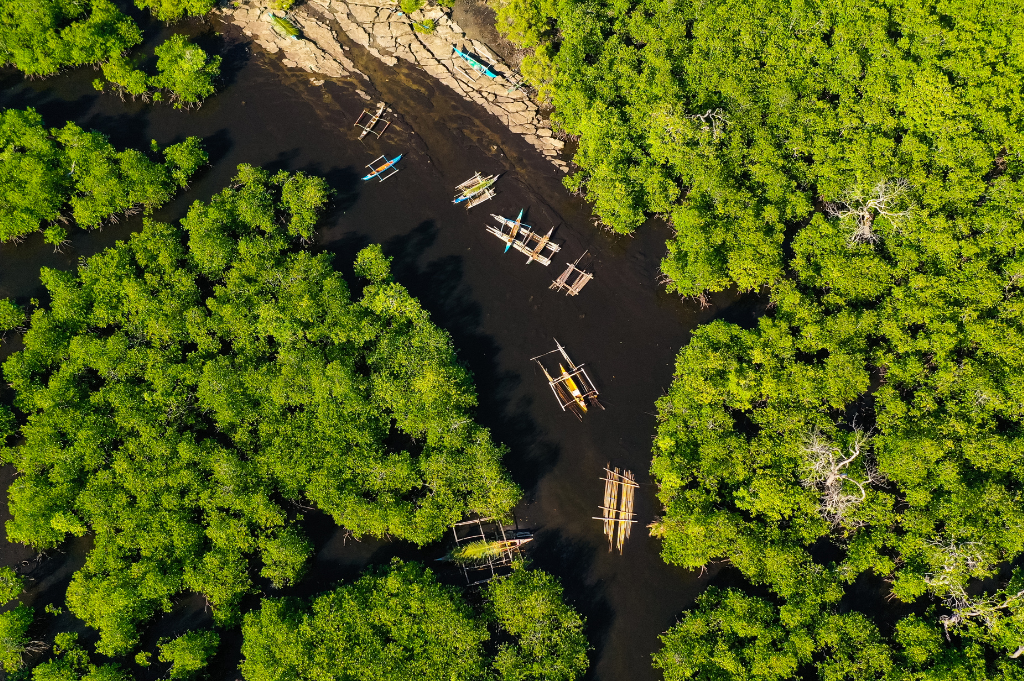
Mangroves, seagrass meadows, and tidal marshes sequester carbon at rates up to ten times higher than mature tropical forests per hectare, according to NOAA. They capture suspended carbon and build organic soil layers in waterlogged conditions where decomposition is slow—storing it for millennia.
Soil Carbon Sequestration
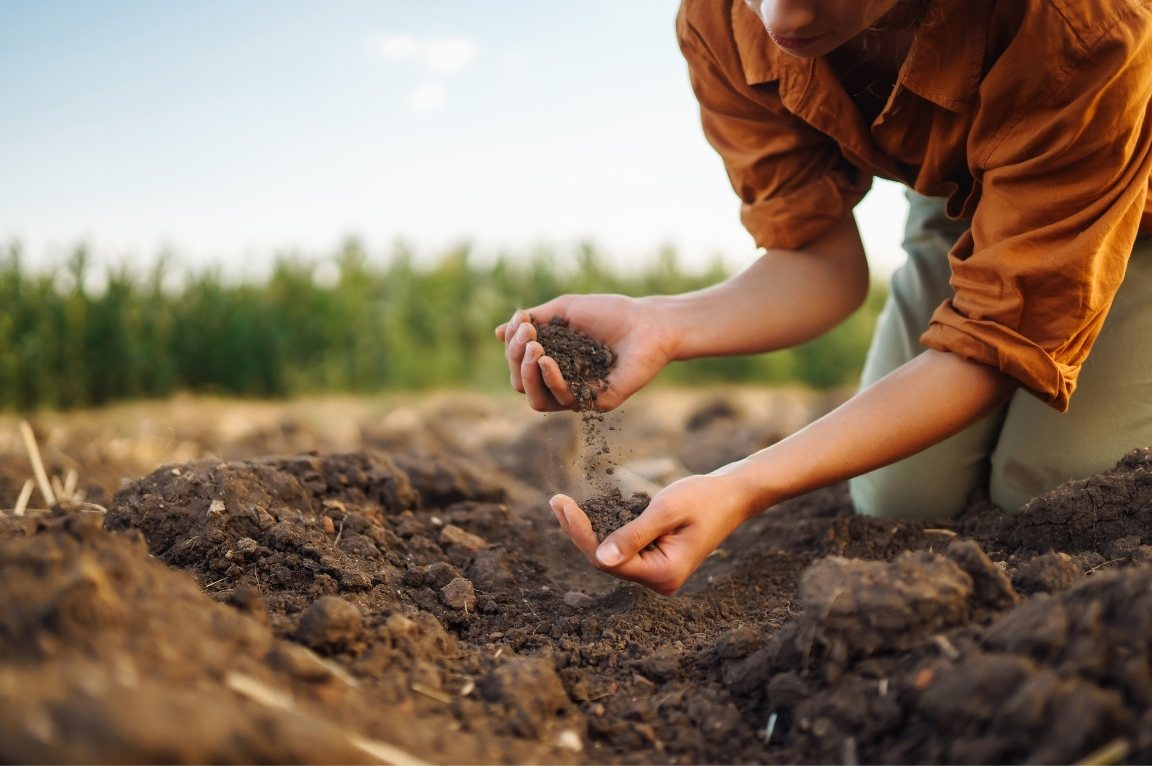
Industrial agriculture typically degrades soil, releasing trapped carbon. Regenerative practices—no-till farming, cover cropping, rotational grazing—can reverse this by restoring soil health and organic matter.
Plants pump carbon into soil through root exudates to feed microbes. Minimizing tillage keeps this carbon trapped rather than oxidizing back into CO₂. The "4 per 1000" initiative highlights that increasing soil organic carbon by just 0.4% annually could significantly offset global emissions—though achieving this at scale remains challenging.
The Biodiversity Dimension
High-quality biosphere projects prioritize species diversity over monocultures. This isn't just ethical—it's practical. Complex, multi-layered ecosystems are more resilient against pests and climate stress, protecting the carbon store from collapse. IPBES research makes clear that carbon goals cannot be met sustainably without simultaneously addressing biodiversity loss.
Engineered Carbon Removals
Engineered pathways use human-made systems to capture and store CO₂, typically offering longer storage permanence with lower reversal risk.
Biochar
Biochar is produced by heating organic biomass in a low-oxygen environment (pyrolysis). This converts carbon into a stable aromatic structure that resists degradation for hundreds to thousands of years.
According to CDR.fyi data, biochar currently accounts for over 90% of delivered high-durability removal credits in the voluntary market. That's not a typo—when it comes to durable removals that have actually been delivered and retired, biochar dominates.
We'll come back to why this matters.
Direct Air Capture (DAC)
DAC facilities use industrial fans to pull ambient air through specialized filters that bind CO₂ molecules. The captured carbon is then separated using heat and compressed for storage—typically in geological formations.
The IEA identifies DAC as key technology for addressing residual emissions from hard-to-abate sectors like aviation. Current costs remain high ($400–1,000+ per tonne), but the pathway offers high permanence when paired with appropriate storage.
Bioenergy with Carbon Capture and Storage (BECCS/BiCRS)
BECCS combines biomass energy production with carbon capture—burning or processing organic material for energy while capturing the resulting CO₂ for permanent storage. This pathway features prominently in IPCC scenarios and EU CRCF discussions.
The challenge: BECCS at scale requires significant land and biomass, raising questions about competition with food production and ecosystem integrity.
Biomass Carbon Removal and Storage (BiCRS)
Beyond BECCS, emerging methods include processing biomass into bio-oil or slurry for deep geological injection—bypassing decomposition entirely by placing carbon into formations where it cannot return to atmosphere.
Geological Storage: The Destination, Not the Pathway
It's worth noting that geological storage isn't a CDR method itself—it's where captured carbon ends up. DAC + geological storage is a pathway. Biomass injection + geological storage is a pathway. The storage layer matters enormously for permanence, but it doesn't capture anything on its own.
The Global CCS Institute reports that global geological storage capacity is sufficient for climate targets, provided the infrastructure gets built.
Why Biochar Is Leading on Real Deliveries
Here's where the market dynamics get interesting.
Among durable CDR options, biochar has quietly become the workhorse. Over 90% of delivered and retired high-durability credits in the voluntary market come from biochar projects. Not contracted—delivered.
Why? Biochar offers a rare combination: permanence (centuries to millennia), immediate deployability (the technology is mature), and compatibility with rigorous measurement, reporting, and verification requirements. You can trace a biochar tonne from feedstock sourcing through pyrolysis to application and long-term storage.
But here's what most market analysis misses:
Biochar doesn't just remove carbon. When designed correctly, it transforms waste management problems into simultaneous solutions for soil health, agricultural productivity, and economic opportunity.
Consider what happens when agricultural residues—rice husks, corn stover, sugarcane trash—go through a well-designed biochar system:
- Residues that would otherwise be open-field burned (releasing CO₂, black carbon, and air pollutants) or left to decompose (releasing methane and CO₂) instead become stable carbon
- The biochar, applied to soil, improves water retention, nutrient availability, and microbial habitat
- Farmers gain a new revenue stream and reduced input costs
- Local air quality improves
- Soil degradation reverses rather than continues
This is what regenerative infrastructure looks like. It's not just "carbon removal with co-benefits"—it's systemic transformation where carbon accounting captures only part of the value.
The Market's Blind Spot
Here's the tension: carbon standards measure tonnes. Everything else—the soil health improvement, the emissions avoided from residue burning, the farmer livelihoods, the water quality—gets classified as unmeasured co-benefits.
That accounting leaves value on the table. It creates a market where the most regenerative projects can't command premium pricing for their full impact. And it shapes investment toward approaches that optimize for tonnes rather than systems.
We think that the market is missing an enormous opportunity. The projects we work on are designed to capture and verify these benefits, not just the carbon.
The Role of Digital MRV Infrastructure
As the carbon removal market matures, trust has become the defining feature of high-integrity CDR. And trust depends on transparent, verifiable data.
Digital MMRV (measurement, monitoring, reporting, and verification)—sometimes called dMRV or dMMRV—data gatehring tools such as sensors, satellites, traceability tools, and analytics to monitor projects from feedstock sourcing through long-term storage.
At Orejen Carbon, we're reimagining this infrastructure layer because we believe verification capability determines market access. Our dMMRV systems can create an audit-ready "digital twin" of each project, making every tonne traceable and auditable.
But here's what makes this infrastructure really exciting:
We're building the capability to verify what markets don't yet fully price.
This isn't about generating more marketing claims. It's about building the measurement infrastructure for a future where markets actually reward regenerative impact—not just carbon tonnage. Buyers increasingly want this data. We expect standards to evolve towards it. We believe that projects that can demonstrate verified co-benefits will access premium pricing and broader market access as the market matures.
What Feedstock Qualifies for Biochar Carbon Credits?
For project developers entering the biochar market, the first question is always feedstock eligibility. To qualify for high-integrity removal credits, biomass must generally be a waste stream or byproduct of sustainable management—material that would otherwise have burned or decomposed, releasing greenhouse gases.
Agricultural Residue Management
Instead of open-field burning or leaving residues to rot, these materials are pyrolyzed into stable carbon.
Examples of potential sources: Rice husks, corn stover, wheat straw, cotton stalks, sugarcane trash
Forestry & Wildfire Prevention
Projects that remove excess biomass to reduce wildfire risk or process waste from timber operations.
Examples of potential sources: Forest thinnings, slash piles from logging, beetle-killed wood, bark, sawmill residues
Agro-Industrial Processing
Food processing facilities generate concentrated, homogeneous waste streams well-suited for biochar.
Examples of potential sources: Nut shells (walnut, almond, coconut), fruit pits (olive, peach), coffee pulp
Urban Green Waste Diversion
Diverting organic material from landfills where it would generate methane.
Examples of potential sources: Municipal yard trimmings, untreated wood pallets from construction
Eligibility Boundaries
Not all biomass qualifies. To ensure environmental integrity, feedstocks must be:
- Free of contaminants (plastics, heavy metals, treated wood)
- Sourced without driving deforestation or ecosystem conversion
- Demonstrably additional (would have decomposed or burned without the project)
- Compliant with applicable methodology requirements
From Tonnage to Transformation
There's a useful parallel emerging from regenerative agriculture: the distinction between "Level 1" practice adoption and "Level 2+" systems transformation.
Level 1 approaches bolt individual practices onto unchanged systems—cover crops added to conventional rotations, reduced tillage without addressing soil biology. Results consistently disappoint because the underlying system logic remains extractive.
Level 2+ approaches redesign whole systems so practices work synergistically. Livestock integrated with cropping. Nutrient cycles closed. The farm begins functioning as an organism rather than a factory. Results are exponentially better—not just incrementally.
Does carbon removal face the same choice? Level 1 CDR optimizes for tonnes within existing market structures whilst Level 2+ CDR builds regenerative infrastructure that delivers carbon removal and soil health and avoided emissions and livelihood improvement as integrated outcomes?
The market currently prices Level 1. Will the projects that define the next decade of carbon removal be built at Level 2+.
At Orejen Carbon, we work with biochar developers across Southeast Asia and India to design and deliver projects that can meet evolving regulatory policies and climate guidance, such as EU CRCF to SBTi V2. Through our proprietary tech stack we are able to re-imagine dMRV and extend this beyond carbon to build digital infrastructure that captures your project's full impact.
References
- 4 per 1000 Initiative. (2015). The "4 per 1000" Goal: Soils for Food Security and Climate.
- CDR.fyi. (2025). Global CDR Market Overview & Year in Review.
- Global CCS Institute. (2023). Global Status of CCS Report: Geological Storage Capacity.
- IEA (International Energy Agency). (2022). Direct Air Capture: A Key Technology for Net Zero.
- IPBES & IPCC. (2021). Biodiversity and Climate Change: Scientific Workshop Report.
- IPCC. (2019). Climate Change and Land: An IPCC Special Report.
- Isometric. (2025). Biochar Carbon Removal Methodology.
- NOAA Office for Coastal Management. Fast Facts: Blue Carbon & Coastal Wetlands.
- Soloviev, E.R., Landua, G. (2016). Levels of Regenerative Agriculture. Terra Genesis International.
Key Takeaways
For project developers:
- Not all green projects qualify as CDR—removal requires extracting atmospheric CO₂ and storing it durably
- Feedstock eligibility is the first gate for biochar projects; waste streams and sustainable management byproducts qualify
- Building to high-integrity standards (CRCF-aligned, Isometric-certified) positions projects for premium markets
- Verification infrastructure that captures co-benefits may grow to differentiate project value
For corporate buyers:
- Biochar dominates delivered high-durability removals for good reason: it works, it's measurable, and it's scalable today
- The gap between contracted and delivered CDR remains significant—due diligence on delivery track record matters
- Projects that verify systemic impact beyond tonnage offer both risk mitigation and narrative value
- Standards are converging globally; CRCF-compliant projects will likely meet future requirements across jurisdictions
For the market:
- Carbon accounting that ignores co-benefits creates a structural undervaluation of regenerative approaches
- Digital MRV infrastructure is becoming table stakes for high-integrity credits
- The bifurcation between "tonnage CDR" and "regenerative CDR" will shape which projects attract capital and which deliver lasting impact
Other articles you may like:
Explore our cutting-edge technologies in carbon removal and sustainability.
.png)