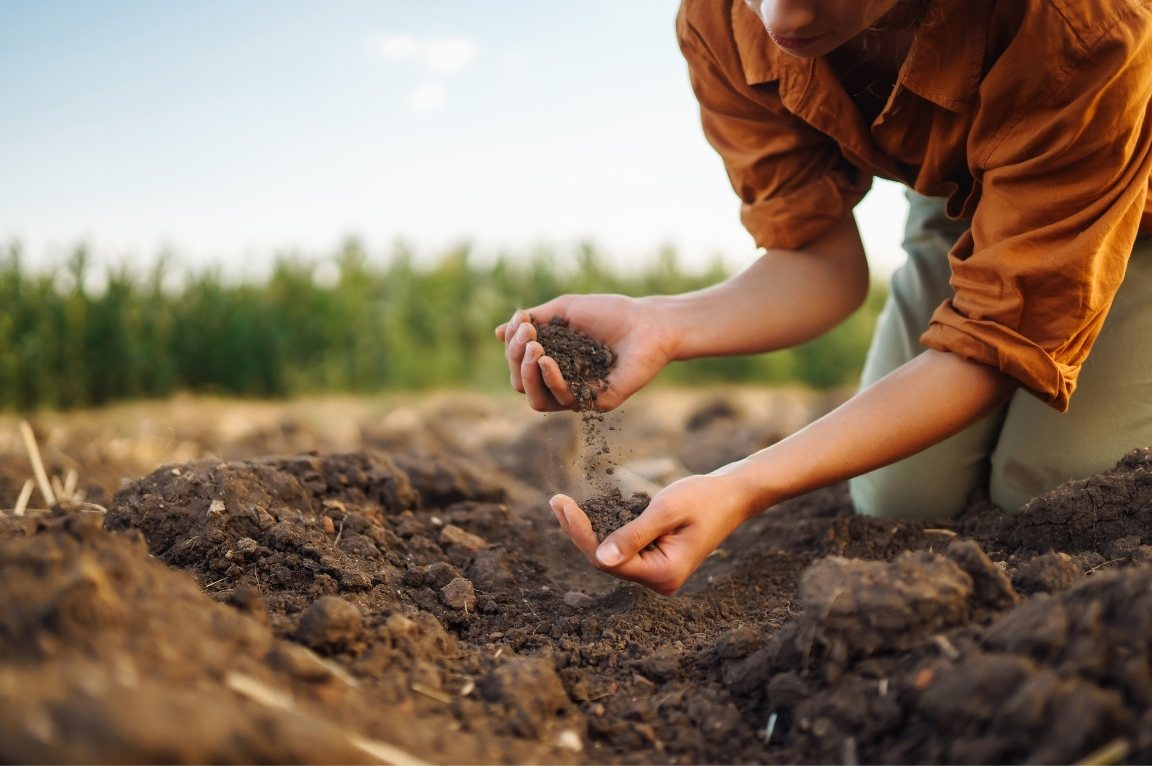
![[background image] image of a farm landscape](https://cdn.prod.website-files.com/68d5806cbf60124f871d0748/6949746a861770bfdca063d7_carbon-removal-2025-the-year-CDR-got-real%20(2).png)
If 2024 was the year of course correction for voluntary carbon markets, 2025 may be remembered as the year of implementation and responsibility.
Across global policy forums, standard-setting bodies, and national budgets, the signal in 2025 appears strong: durable Carbon Dioxide Removal (CDR) is no longer a peripheral “nice-to-have.” It is increasingly embedded in climate governance, corporate net-zero strategies, and public investment decisions.
As the year closes, three forces stand out in shaping the trajectory of high-integrity carbon removal.
Global policy momentum
In 2025 carbon removal surged from niche to center stage.
Policymakers and standards bodies formally embraced CDR. At COP30 in Belém, Brazil, the UNFCCC embedded removals in global markets and diplomacy. Article 6.4 of the Paris Agreement confirmed carbon removals as eligible mitigation outcomes—covering both nature-based and engineered pathways—under the centralized crediting mechanism. Projects can now proceed once methodologies are finalized, with detailed rules on permanence and monitoring to follow.
Crucially, COP30 hosted the first-ever Carbon Removal Pavilion. Backed by more than 90 organizations, the CDR30 Pavilion sent a powerful signal: as its organizers put it, "carbon removals step fully onto the world stage."
Science-based target frameworks moved in tandem. The SBTi's Corporate Net-Zero Standard V2—released for public consultation in March 2025—explicitly provides a pathway for durable removals. The draft standard enables a gradual transition from temporary to more durable removals over the 2030–2050 period, aligned with IPCC scenarios. For the first time, companies can plan net-zero pathways that formally incorporate long-lived removal solutions as part of their decarbonization strategy, rather than relegating removals to a last resort.
Europe took major steps as well. The Carbon Removals and Carbon Farming (CRCF) Regulation—adopted in late 2024—moved into implementation in 2025. In November, the Commission adopted Implementing Regulation (EU) 2025/2358, setting transparency standards for certification schemes and clear rules for certification bodies and audits. The first call for certification scheme applications is expected in early 2026, with delegated acts for permanent removals (including biochar) to follow.
The EU Buyers' Club: A Demand Signal Worth Watching
Perhaps the most significant market-shaping announcement came in December: the Commission will establish an EU Buyers' Club to pool voluntary demand for CRCF-certified credits. By aggregating corporate purchasing power, this initiative aims to provide a clear demand signal for carbon farming and permanent carbon removals—generating new revenue streams for farmers and project developers while supporting corporate climate commitments.
Alongside the Buyers' Club, the EU announced an open-access Carbon Farming Database to lower MRV costs. Together, these measures give companies confidence to invest, knowing that removal credits under the CRCF framework will be high-quality and market-accepted.
National commitments
Many governments put serious money behind removals in 2025. Germany in emerged as a CDR pioneer.
In December, the German Bundestag approved the 2026 federal budget with a dedicated funding line for carbon removal: €156 million for 2026, with commitments totaling approximately €476 million through 2033. This includes project funding, R&D support, and—critically—public procurement of removal credits to stimulate market demand. Germany also moved to amend its CO₂ Storage Act to permit nationwide transport and underground storage of CO₂, a prerequisite for many engineered removal pathways.
Other countries followed suit. Sweden, Switzerland and Canada announced new funds or policies to back CDR. The Nordic countries formed the Nordic Carbon Removal Association to coordinate investments across the region. The UK confirmed plans to integrate CDR into its emissions trading system by 2029.
North America saw action too. Despite federal policy shifts in the United States, states and private investors continued to pour capital into DAC hubs and nature-based removal projects. The voluntary market's momentum proved resilient—driven by corporate demand rather than government mandates.
Market & technology advances
As policy frameworks matured, market data in 2025 delivered a clear message: carbon removal is scaling. But the picture is nuanced—and understanding the nuance matters.
BECCS Dominates Contracts; Biochar Dominates Deliveries
By contracted volume, Bioenergy with Carbon Capture and Storage (BECCS) is the dominant pathway—accounting for roughly 75% of total durable CDR contracted since 2022, driven largely by massive multi-million-tonne offtake agreements (most notably from Microsoft). Biochar sits at approximately 10% of contracted volume, roughly on par with Direct Air Capture.
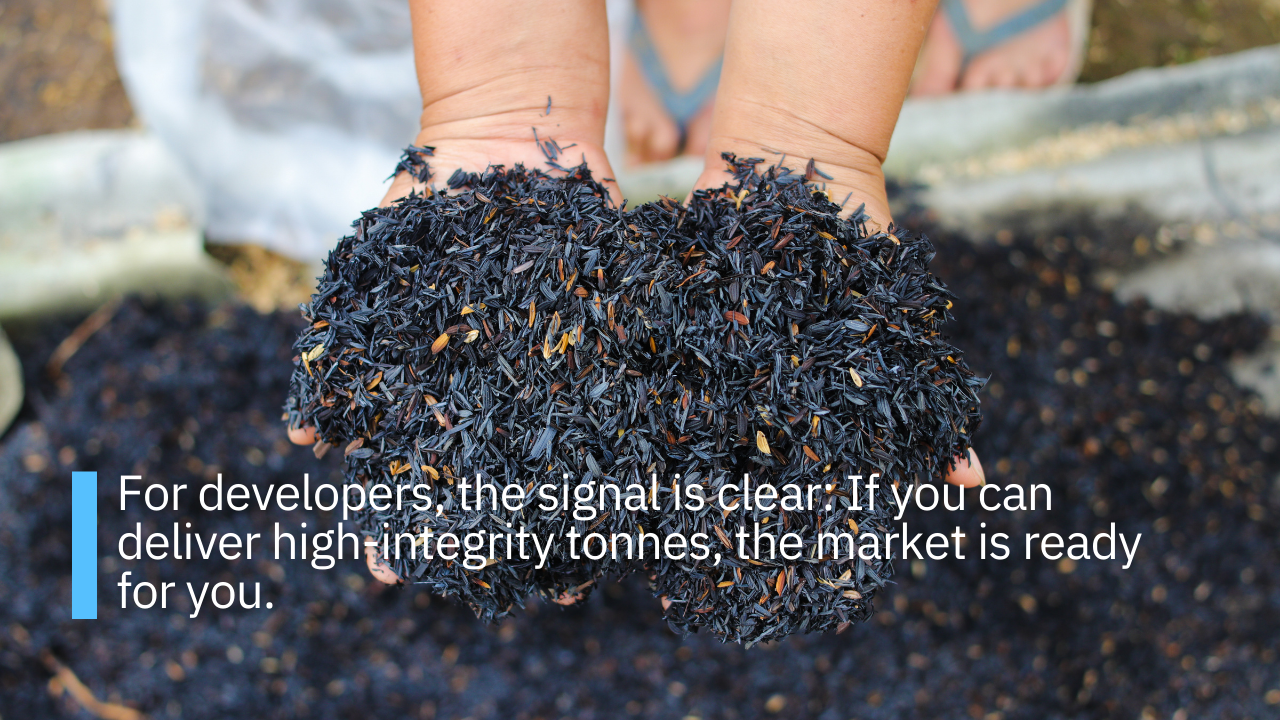
But here's what matters for buyers today: biochar leads on actual deliveries. As of late 2025, 86% of all durable CDR credits delivered—and 92% of all credits retired—are biochar carbon removals. Biochar's dominance in deliveries reflects its rare combination of proven permanence, immediate deployability, and compatibility with rigorous MRV requirements. It delivers verifiable tonnes now, not promises for 2030.
Market Milestones
The voluntary market crossed a significant threshold in 2025: over one million tonnes of durable removals delivered, distributed across 117 suppliers in more than 28 countries. In the first half of the year alone, approximately 1.6 million tonnes of biochar removals were transacted—more than all prior years combined—anchored by landmark multi-year deals.
Major corporations continued to lead demand. Microsoft, Google, JPMorgan Chase, and Airbus signed long-term offtake agreements for hundreds of thousands of tonnes. Microsoft alone accounted for nearly 80% of high-durability CDR purchases in recent years—a concentration that underscores both the market's momentum and its need for buyer diversification.
Supply is Increasingly Pre-Committed
For biochar specifically, the supply picture is increasingly constrained. By late 2025, an estimated 89% of high-quality biochar credits for the year had already been committed—up from 62% earlier in the year. Even 2026 supply is heavily pre-committed, with roughly 40% already locked into offtake agreements. Companies waiting to purchase on the spot market are likely to face rising prices and limited access to high-integrity projects.
Technology Progress Across Pathways
Technological progress continued across all major pathways. Direct Air Capture advanced from pilot-scale experimentation toward early commercial deployment, with new innovation centers (including Deep Sky's Alpha facility in Alberta), modular designs, and cost-reduction efforts pushing toward sub-$500/tonne targets.
Nature-based and hybrid pathways also progressed: large-scale biochar facilities broke ground (including what will be the world's largest in Bolivia), enhanced rock weathering achieved its first independently verified credits, and new governance initiatives emerged to strengthen scientific oversight of marine CDR.
The overarching trend in 2025 was pragmatic rather than speculative. The market increasingly rewarded solutions capable of delivering verifiable tonnes today, while continuing to invest in the technologies needed for future scale.
Orejen Carbon: Enabling High-Integrity CDR
As this momentum builds, Orejen Carbon is positioned to help companies and projects turn policy into impact.
We design, deploy and verify biochar CDR projects end-to-end, backed by cutting-edge digital tools. Our Carbon Intelligence Platform can integrate satellite and sensor data, blockchain traceability, and advanced analytics (the “dMMRV” stack) to monitor removals in real time: from biomass sourcing and reactor operations to soil application and long term storage. Every tonne is traceable, auditable, and aligned with the MRV requirements of leading standards.
We Translate Policy into Project Requirements
For corporate buyers navigating SBTi-aligned targets, EU CRCF rules, or the evolving Green Claims Directive, Orejen Carbon translates regulatory frameworks into biochar carbon removal (BCR) project specifications and documentation. We help climate teams understand why BCR is uniquely positioned for these emerging standards—combining the permanence thresholds regulators demand, the delivery track record buyers need, and the MRV rigor that auditors expect.
For landowners or developers, we partner on biochar and soil-carbon projects from feasibility through credit issuance, embedding the robust MRV needed to access certified high-integrity carbon removal markets.
👀 Looking ahead:
2025 proved that durable CDR is both necessary and achievable. With supportive policies, growing corporate demand, and rapid technology progress, we now have the ingredients for large-scale carbon drawdown.
Orejen Carbon will continue to push forward – scaling biochar systems, pioneering MRV innovation, and helping the next wave of projects get off the ground. For any organization eager to act on climate science and seize this moment, Orejen Carbon has the technical depth and project execution experience to turn biochar’s potential into verified tonnes.
2026 is the year to move from ambition to action. Together, we can make carbon removal real.
Other articles you may like:
Explore our cutting-edge technologies in carbon removal and sustainability.
.jpg)