
Expert Insights

Distributed Biochar for Smallholder Communities
An Expert Q&A with Orejen Carbon's Director
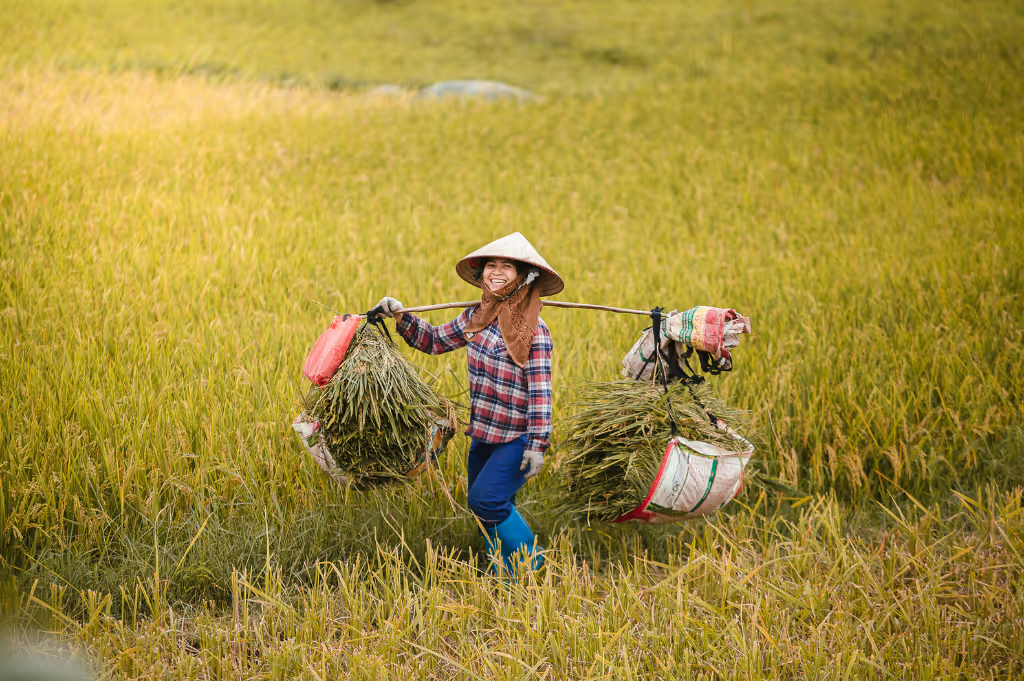
Distributed, community-scale biochar is often described as the “next frontier” for carbon removal in rural and smallholder farming regions. But turning that promise into real, durable carbon removal isn’t straightforward.
In this Expert Insight, Orejen Carbon Director Patrick Watene shares his perspective on what a high-integrity distributed biochar model should look like in practice – from technology choices and moisture constraints to ecosystem architecture and impact for smallholder communities.
In this Expert Insight, Orejen Carbon Director Patrick Watene shares his perspective on what a high-integrity distributed biochar model should look like in practice – from technology choices and moisture constraints to ecosystem architecture and impact for smallholder communities.
Q1 – Why is distributed biochar for smallholder communities such an important topic right now?
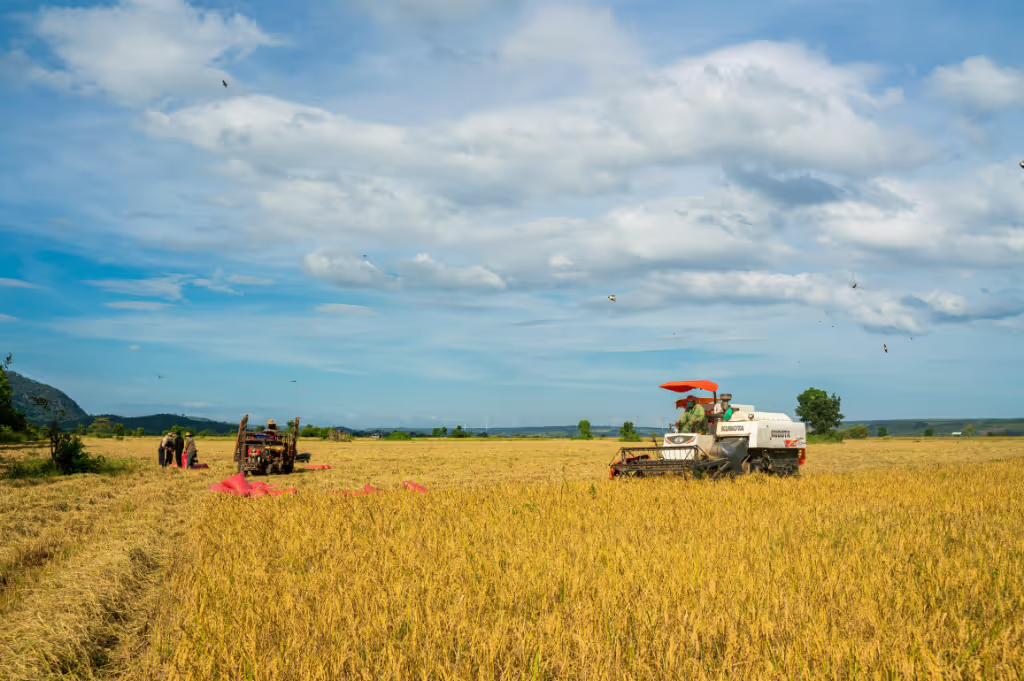
Smallholder and rural communities are on the frontline of the climate crisis. They face crop loss, land degradation, and extreme weather – but they typically have the least access to climate finance and enabling infrastructure.
Distributed, community-scale biochar changes that equation. If we do it well, we can turn thousands of small farms into a network of high-integrity carbon removal nodes. Communities get better soils and new income streams, while buyers get verifiable, durable removals.
The catch is that good intentions and small kilns are not enough. Distributed projects have to meet a high integrity bar as well. That’s why the way we design these models – technologically, operationally, and institutionally – really matters.
My thinking comes from more than two decades working with smallholder farming communities and helping connect their livelihoods to global markets.
Distributed, community-scale biochar changes that equation. If we do it well, we can turn thousands of small farms into a network of high-integrity carbon removal nodes. Communities get better soils and new income streams, while buyers get verifiable, durable removals.
The catch is that good intentions and small kilns are not enough. Distributed projects have to meet a high integrity bar as well. That’s why the way we design these models – technologically, operationally, and institutionally – really matters.
My thinking comes from more than two decades working with smallholder farming communities and helping connect their livelihoods to global markets.
.png)
Key Takeaways
- Technology Upgrade: High-integrity distributed biochar requires a shift from open kilns to "enhanced artisan" systems—enclosed reactors with thermal control and emissions management.
- The Ecosystem Model: Success isn't just about the hardware; it requires a centralized "hub" to handle aggregation, training, and digital verification (dMMRV) across thousands of farms.
- Pragmatic Rigor: Sampling protocols and moisture constraints must be adapted for enclosed systems, using stratified sampling and empirical pilots to balance scientific accuracy with operational reality.
- Valuing Impact: To scale effectively, the carbon market needs an "IMPACT recognition pathway" that rewards the specific livelihood, soil, and ecological co-benefits of smallholder projects.